Whiskers by the Till: The Unwritten Rules of Britain’s Corner-Shop Cats
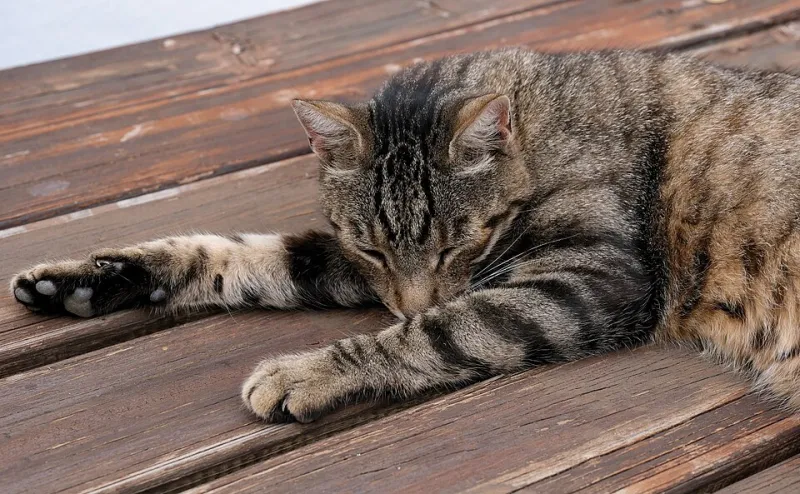
Photo: Alvesgaspar, CC BY-SA 4.0, via Wikimedia Commons
There is a particular kind of British shop that does not advertise. It has a bell above the door, a noticeboard held together by drawing pins, a fridge humming like a distant tractor, and — somewhere near the till — a cat. The cat is not a mascot. The cat is not an employee. The cat is, by all observable evidence, the landlord.
In 2026 we can order almost anything from a rectangle in our pocket, yet the corner-shop cat remains gloriously unreformed. It has no loyalty app. It does not care about your delivery slot. It has found the warmest spot in the building and intends to stay there until further notice. And honestly? Good for it.
The cat is not on the payroll
Let’s be clear about the hierarchy. The human behind the counter handles the lottery terminals, the milk deliveries and the slightly emotional conversation about whether the local bus is ever coming back. The cat handles morale. This is an important job, even if the cat performs it with its eyes closed.
You will find shop cats in all sorts of establishments: the family-run convenience store, the hardware shop that still sells one screw for 12p, the newsagent with a warning sign about schoolbags, the village post office where the queue is also a social club. The cat is the only member of staff who never gets asked a difficult question. It simply exists, and the shop feels better for it.
There is something deeply reassuring about a cat on a counter. It says: this place has been here a while. It says: we are not in a rush. It says: yes, the card machine is temperamental, but have you considered stroking something soft while you wait?
A field guide to shop-cat types
The Till Loaf
Circular, warm and entirely unbothered. The Till Loaf has chosen the patch of counter next to the card reader because it is exactly the right temperature. It will not move for your contactless payment. You will have to perform a small, apologetic lean around it. This is normal. Do not make it weird.
The Scratchcard Sphinx
Positioned directly on top of the lottery scratchcards, one paw resting on the display like a tiny, furry bouncer. The Scratchcard Sphinx is not guarding them, exactly. It simply refuses to be relocated. If you want a scratchcard, ask the human. Do not attempt to negotiate with the cat. Negotiations have been tried. They did not go well.
The Newspaper Editor
Sits on the local paper. Reviews the headlines with half-closed eyes. Occasionally shifts its weight to cover the crossword. The Newspaper Editor has strong opinions about council parking charges and no way to express them except by kneading the sports section.
The Window Ambassador
Draped across a display of greetings cards or a box of oranges, visible from the pavement, drawing in passing children and adults who suddenly remember they need something. Anything. The Window Ambassador is the shop’s most effective marketing campaign and receives no commission.
The Back-Room Phantom
Rarely seen in full. A tail disappears behind the shelves. A pair of eyes glints near the pet food. The Back-Room Phantom creates a sense of mystery and occasionally emerges to accept a chin scratch before vanishing again. Do not follow it. It has things to do.
The Part-Time Greeter
Available for attention between roughly 8am and 9am, then off duty. The Part-Time Greeter may wind around your ankles, allow a brief head pat, and then look at you as if you have overstepped. This is not rejection. It is simply the end of the appointment.
The etiquette, because there is always etiquette
A shop cat is a shared local treasure, which means there are rules. They are not written down, but they are enforced by glances from the owner and the quiet judgement of other customers.
Do not wake the cat. This is the first commandment. A sleeping shop cat is performing a public service. Let it sleep. If your item is underneath the cat, ask the human for help.
Do not offer the cat your sausage roll. It is kind of you to think of it. It is also a one-way ticket to a vet bill and an awkward conversation. Shop cats may look as though they have not eaten since Tuesday, but they are almost certainly better fed than you are. Ask the owner before offering any treat, and accept no as a complete answer.
Always ask before touching. Some shop cats love a fuss. Some are elderly, shy or simply on a break. Some shops have a strict “look, don’t stroke” policy. Ask the person behind the counter first. They know the cat’s mood better than anyone.
Do not pick the cat up. Ever. Not even if it seems to be asking. Especially not if it seems to be asking. That is a trap.
Keep dogs outside — or ask first. Even the most chilled shop cat may object to a spaniel with opinions. The owner will tell you if it is fine. Assume it is not.
Do not block the queue to take photos. A quick snap is fine if the shop is quiet and the owner is happy. Flash is not. Nor is crouching in the doorway while someone tries to buy a pint of milk.
Respect the cat’s working hours. If it walks away, that is the end of the interaction. You have been dismissed. It is not personal. It is cat management.
Why the shop cat still matters
We live in an age of self-checkouts, reusable bags and same-day delivery, and yet the shop cat remains a genuinely useful piece of local infrastructure. It gives strangers something harmless to talk about. It teaches children to be gentle. It turns a transaction into a tiny social moment. You came in for batteries; you left having had a brief, wordless connection with another living creature. That is worth something.
The corner-shop cat is also a reminder that not everything needs to be optimised. It is not there to increase footfall, though it probably does. It is not there to improve customer experience, though it absolutely does. It is there because it found a warm spot and the humans were too polite to move it. That is the most British origin story imaginable.
So next time you push open that door and hear the bell, look before you lean. There may be a loaf on the counter, a sphinx on the scratchcards, or a tail disappearing behind the crisps. Say hello if invited. Ask first. And whatever you do, do not wake the cat.
Nominate your local legend
Druzi wants to hear about the shop cats of Britain: the ones who sleep on the till, supervise the newspaper rack, or have a very specific spot in the window that no display can ever replace. Send us the cat’s name (if it has one), the shop, the town and a short description of its duties. We will celebrate a few favourites in a future round-up. Extra points for a photo where the cat looks mildly inconvenienced by your presence. That is the genre.