The Glass Box Social: Why Britain’s Bus Shelters Have Become the Street’s Front Room
There’s a particular kind of British magic in a bus shelter at 9.15 on a Tuesday morning. No bus due for twelve minutes. Someone has left a paperback with a note that says ‘good, but sad’. Someone else has pinned up a notice about a missing cat. A stranger says ‘cold, isn’t it?’ and by the time the 47 finally rolls in you know their daughter is moving to Leeds, their allotment has slugs, and they once met a minor member of the royal family in a garden centre near Scunthorpe.
In 2026, these humble glass boxes are quietly becoming the most social square footage in Britain. Not the village hall. Not the café. Not the pub. The bus shelter. The place we built for waiting has been adopted, decorated and gently reprogrammed into something that feels suspiciously like a front room.
A Room With a View (Of the Number 47)
Most bus shelters are not beautiful. They are aluminium, glass and a bench that is either too cold or too warm depending on the season. But give a shelter to the right village and it becomes a small civic project with a timetable attached.
In a Norfolk village this year, the shelter has been turned into a rotating postcard gallery. Each month, a different resident chooses twelve postcards from their life and pins them up with a handwritten caption. Last month’s theme was ‘places I have eaten a sandwich’. It was, by all accounts, unexpectedly moving.
In West Yorkshire, one shelter now has a small shelf of useful things: a spare umbrella, a dog lead, a pair of gardening gloves and a Tupperware box labelled ‘emergency biscuits, please replace’. In the Scottish Borders, a shelter has become the permanent home of a jigsaw puzzle that nobody admits to starting. In a Welsh valley, someone has added a plant pot. The plant is fake. The sign says ‘it’s the thought that counts’.
None of this is official. All of it is happening.
The Etiquette of the Bench
Shelter life has rules, and like all the best British rules they are unwritten, fiercely upheld and slightly contradictory.
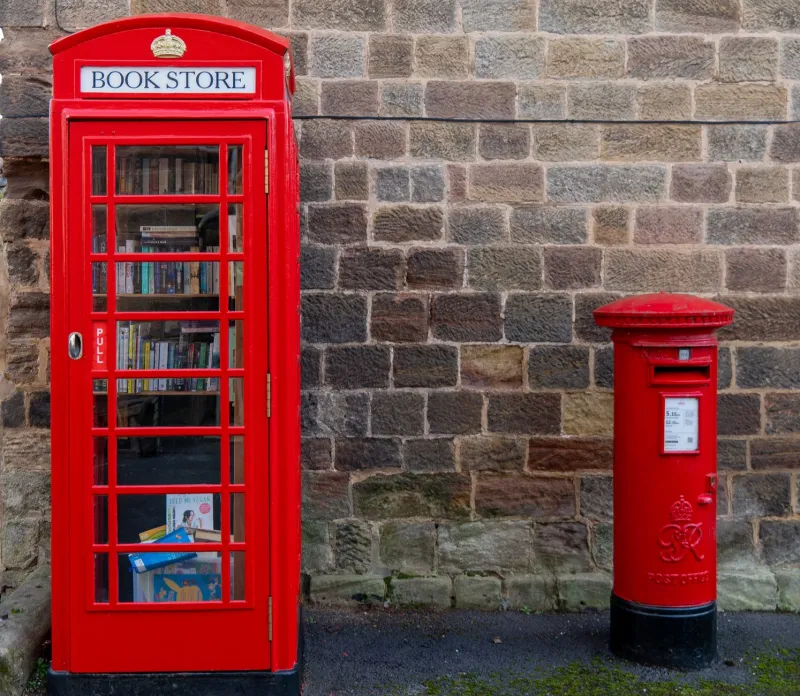
Do not sit in the middle of the bench if someone is already there. Leave at least one seat’s worth of polite distance unless the shelter is full, in which case you may sit where you like but must not make eye contact for longer than two seconds. If you take a book, leave a book. If you finish the jigsaw, leave a note. If you move the laminated timetable, put it back exactly where it was, because the laminated timetable is the closest thing this village has to a constitution.
There is also the matter of the shelter keeper. Every adopted shelter has one: the person who wipes the bench, removes the flyers for events that happened in 2024, and quietly replaces the dying pen on the string. They are rarely elected. They are simply the person who noticed.
And there is the chat. Low-stakes, weather-first, no commitment. You can talk about the bus, the rain, the price of a return ticket to the retail park. You can talk about the fact that the 47 is always late, and then you can both agree that it is better than the 12, which once failed to appear entirely. It is a conversation with a built-in exit. The bus arrives. You leave. Nobody has to organise anything.
From Timetable to Tiny Gallery
What makes the 2026 bus shelter boom so charming is how small it is. Nobody is trying to build a cultural quarter. They are trying to make twelve minutes of waiting slightly less boring.
In Suffolk, a shelter has hosted a ‘museum of lost gloves’ — fourteen single gloves, each with a label describing where it was found and a speculative backstory. In the West Midlands, a shelter became a poetry stop for the 08:12, with poems laminated and clipped to the glass. In Cornwall, one shelter has a visitor book. The entries are mostly about the weather, but there is a growing column of recommendations for nearby cream teas.
This is not a new idea, exactly. People have been pinning notices to bus shelters for as long as there have been bus shelters. But something has shifted. In 2026, the shelter is less a place you pass through and more a place you check. You might go to the shelter without needing the bus. You might go just to see what’s new.
The Noticeboard Economy
A bus shelter noticeboard is the hyperlocal internet without the algorithm. It is where you find out about chair yoga, a missing cat, a free bag of apples, a hedge-cutting working party and a ukulele group that meets on Thursdays. It is where the parish council posts things it forgot to put on the website. It is where someone has written ‘help wanted’ on a tear-off strip and nobody has torn one off because nobody is quite sure what the help is for.
The shelter noticeboard has better reach than some Facebook groups. It is seen by people who don’t use Facebook, people who do use Facebook but are tired of it, and people who are simply waiting for a bus and have nothing else to read. It is the most honest media channel in the village.
Why the Glass Box Wins
So why does a glass box by the roadside feel more like a community living room than the places built for it?
Because it asks nothing of you. There is no booking, no dress code, no membership fee, no need to buy a coffee to justify your seat. You can be there for two minutes or twenty. You can talk or not talk. You can read a book, finish a jigsaw, or stare at the laminated timetable and wonder why the 47 is always late.
It is also neutral ground. The village hall belongs to the village hall committee. The café belongs to whoever owns it. The pub belongs to its regulars. The bus shelter belongs to everyone and no one, which means it belongs to the person who decides to look after it this month.
And it is short. That is the secret. A bus shelter friendship is a twelve-minute friendship, and that is often exactly the right length. You get the warmth of a chat without the admin. You get the sense of a place without the pressure to join it.
A Word of Caution
Not every shelter is a success story. Some are vandalised. Some are bypassed by the bus company. Some are just cold. The shelter boom works because people care for them locally, not because glass boxes are magic. If you are thinking of adopting your local shelter, start small. A book. A notice. A laminated poem. Do not start with a mural. Do not start with a rota. Do not start with a fundraising committee. Start with the bench.
And if you are waiting for a bus this year, look around. The bus might be late. The room is open.
Here at Druzi, we are suckers for a low-stakes social. The bus shelter is the most low-stakes social of all. It is the front room with a timetable. It is the village living room with a draught. It is, somehow, exactly what we needed.