The Lead by the Door: Britain’s Quiet Boom in Part-Time Dog Ownership
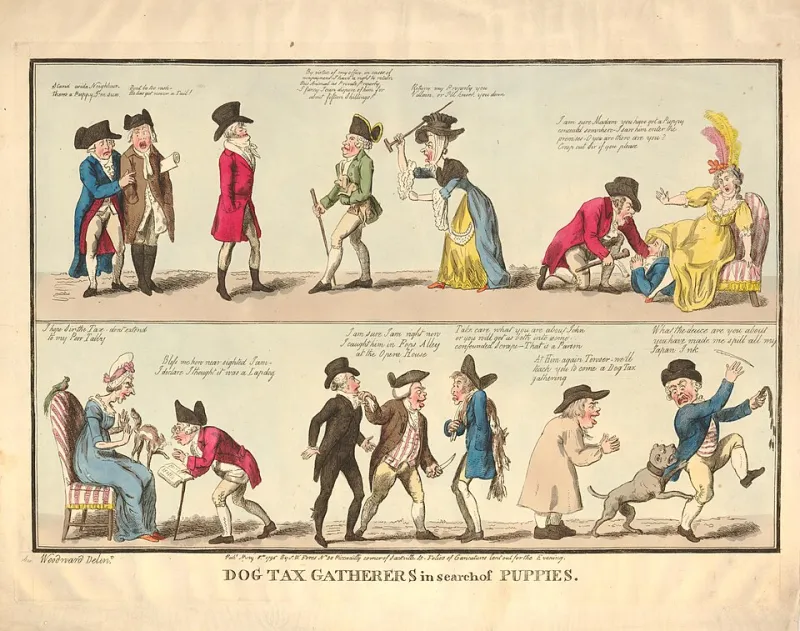
Photo: Print made by: Isaac Cruikshank After: George Moutard Woodward Published by: S W Fores, Public domain, via Wikimedia Commons
Picture a street in south Manchester, early evening. A Labrador called Stan is sitting by a front door that is not his own. He knows the routine: lead off the hook, a quick sniff of the geraniums, then forty minutes around the park with the neighbour two doors down. Stan’s owner is still at work. The neighbour gets some company and a reason to put her shoes on. Stan gets an extra walk and the chance to pretend he has never been fed. Nobody has signed a contract. Nobody has downloaded an app. It is a dog-share, and it is happening quietly on roads all over Britain.
The five-minute handshake
Most of these arrangements do not begin with a formal scheme. They begin with a sentence over a fence. Something like: “If you ever want company on your walk, he’s fine with you taking him.” That is the whole pitch. The rest is trial and error, usually conducted in public, with a poo bag in one pocket and a tennis ball in the other.
There are formal versions, of course. BorrowMyDoggy has been matching owners with dog-loving walkers since 2012, and it has done a lot to make the idea feel normal. You can find part-time companions for everything from a spaniel to a schnauzer, with vet cover and messaging built in. But the version spreading through neighbourhoods is less structured. It is a favour that becomes a habit, then a fixture. The lead lives by the door. The dog knows which house to pull towards.
What everyone gets out of it
The dog, frankly, is winning. More walks, more sniffs, more people who will throw a ball badly and then throw it again. Owners get cover for late meetings, recovery from illness or the simple relief of knowing the dog is not staring at the hallway clock. The borrower gets something less easy to name: routine, a reason to leave the desk, and the particular comfort of a wet nose arriving at the door.
For renters who cannot have a dog, or anyone testing whether they actually want the 6am commitment, it is a low-stakes trial. For older neighbours, it can be a gentle way back into daily walks without taking on full responsibility. And for the dog, it is a wider social circle. A borrowed dog is not a shared custody arrangement. It is more like having a favourite auntie on the street.
The etiquette bit nobody puts on a poster
This is where it can go wrong — not dramatically, just awkwardly. Dog-sharing works best when both sides say the quiet bits out loud.
- Ask before you feed. Treats are not a free-for-all. Some dogs are on diets, some have allergies, and some will refuse their dinner for a week after a neighbour discovers the sausage jar.
- Carry more poo bags than you need. This is not a moral lecture. It is simply that the one time you leave the house with a single bag is the one time the dog has plans.
- Decide whose ball it is. Sounds trivial. It is not. A beloved tennis ball can become a small diplomatic incident if it goes missing under a hedge. Buy your own, or agree that the ball stays with the lead.
- Respect the lead rules. If the owner walks on a short lead by the road, do the same. If the dog is not reliable around other dogs, do not test the theory on a busy Saturday.
- Return time matters. A borrowed dog is not a rental car, but the principle is similar: come back when you said you would. If you are running late, text. The owner is probably pretending not to watch the window.
- Do not retrain the dog. You are not the fun uncle who teaches it to high-five. You are the person keeping the routine steady. Leave the commands alone.
Insurance, vet bills and the boring bits
Here is the part people skip. Pet insurance usually covers the dog, not the person walking it. If you are taking someone else’s dog out regularly, it is worth checking whether your home insurance includes third-party liability, and asking the owner what their policy says about other walkers. Formal schemes often include accident and vet cover as part of the arrangement, which is one reason people pay for them. Informal swaps rely on goodwill and a bit of paperwork.
Agree the basics early: who pays if the dog needs a vet, which vet to call, whether the dog has any ongoing conditions, and what to do if it slips the lead. Keep the owner’s number in your phone. Carry a spare lead. In warm weather, remember that pavements get hotter than the air, and a midday walk is not always a kindness. These are not glamorous details, but they are the difference between a lovely arrangement and a strained one.
How to ask without making it weird
The awkwardness usually sits with the person who wants to borrow the dog. They worry it sounds like a request for free pet therapy. It does not, as long as you are clear. Try: “I’m not angling for a free dog, but if you ever need someone to take him round the block, I’d genuinely enjoy it. No pressure.” That gives the owner an easy exit and an easy yes.
From the owner’s side, be specific. “You’re welcome to take him Tuesdays if you fancy it” is much easier to accept than a vague offer that both parties have to interpret. Start with one walk together. Watch how the dog behaves with the person. Then let them go solo if it feels right. Do not overpromise. A borrowed dog should fit around your life, not become another obligation you dread.
A different kind of Tuesday
The borrowed dog is not a solution to loneliness, and it is not a substitute for proper dog ownership. But it is a small, practical kind of good company. It gives a street a bit more traffic — the friendly sort. It turns a neighbour into someone you text about a missing ball. It makes a Tuesday feel like it has a shape.
Since the drill down the road became the neighbourhood’s favourite loan, the lead by the door may be its warmest rival. If you have been thinking about asking, ask. The worst that happens is a polite no and a slightly awkward bin day. The best is a wet nose at the door and a standing appointment you actually look forward to.