Why Nobody Wants to Live at Number 13 (And Other Front-Door Mysteries)
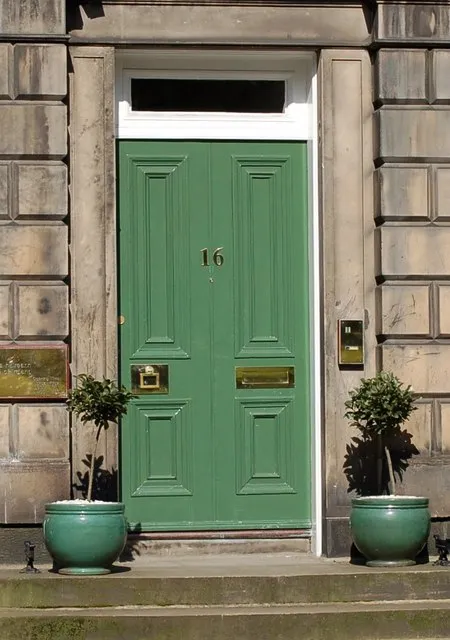
Photo: Paul McIlroy, CC BY-SA 2.0, via Wikimedia Commons
There's a house on my walk to the shop that has no number at all. Just a brass plate reading The Anchorage, which is odd because the nearest sea is forty miles away and the closest thing to a boat is a wheelie bin with a broken lid. I've passed it a hundred times and only recently clocked the mystery: somewhere between the pebble-dash and the hanging basket, the number has simply vanished. No 14, no 16, no clue. Just a name and a faint sense that the house has decided it's above all that.
Britain is full of this stuff. Front doors are doing quiet, unlegislated storytelling all over the country, and most of us walk past it every day without asking the obvious question: what on earth is going on here?
The house that decided to be called Dunroamin
Somewhere along the line — probably in the suburbs, probably between the wars — Britain got the idea that a house shouldn't just be a number. It should have ambition. Hence the great tradition of names like Dunroamin, The Laurels, Fairview, Rose Cottage (even when there are no roses and it's not a cottage) and, my personal favourite, a bungalow near my aunt's called Chez Nous, which is French for "at ours" and which the owner pronounces "chez noose" with total confidence.
A house name is a tiny act of self-invention. It says: I am not merely a point on a municipal grid. I am a residence. And whether it's a touch naff or genuinely lovely depends entirely on your mood that day. There's something quite charming about it, though. A street of numbered boxes with one rogue Dunroamin in the middle is a street with a personality.
The strange business of 13a
Then there's the numbering. British streets, unlike some of our European neighbours, are famously a bit of a free-for-all. Odds one side, evens the other — usually. Sometimes consecutive, sometimes not. Sometimes numbers that simply give up entirely and restart somewhere else, leaving you standing outside a hedge wondering if you've slipped into a different postcode.
And then: 13a. The great British workaround. Somewhere in the history of your street, a plot was divided, a coach house was converted, or a gap appeared that nobody quite knew what to do with. Rather than renumber the whole terrace — which would have prompted a decade of redirected post and at least one furious letter to the council — somebody sensibly said: "Let's just call it 13a and move on."
It's a deeply pragmatic solution to a problem that never needed a committee. It also means that somewhere in Britain today, a delivery driver is standing in the rain, staring at a doorbell, quietly losing their mind.
Skipping a number is a moral decision
I once lived on a road where number 13 simply didn't exist. The houses went 11, 15, 17. No explanation, no plaque, just a silent gap in the sequence as if the street had decided not to mention it. A neighbour told me it was "unlucky", said with the tone of someone who'd been told that by their mother and had never felt the need to interrogate it further.
And this is where front-door geography gets genuinely interesting. A missing number isn't usually an accident. It's a small record of local superstition, of a builder's decision, of a plot that was never built or a house that was demolished and never replaced. The street is quietly holding a bit of its own history in the gap between two gates.
The front door as a conversation starter
Here's the thing: all of this is free social glue. I've had longer conversations about the phantom number 13 on my old road than I've had with some people I've known for years. "Have you noticed?" is one of the most underrated phrases in the British neighbour's vocabulary. It's a soft opening, a no-pressure invitation to be nosy together.
And house names are even better. Compliment a Dunroamin and you'll often get a story — who named it, when, why, and what it was called before. It turns out that a lot of people are quietly delighted to be asked about the sign by their door. It's a topic with no wrong answers.
So next time you're walking somewhere unfamiliar, look up. Count the numbers. Notice the gaps. Spot the one house that's gone rogue with a name. It's a tiny, harmless hobby with a surprisingly high hit rate for starting a chat with someone you'd otherwise never speak to.
Over to you, Britain
This is where you come in. We're collecting the strangest front-door mysteries in the country for 2026 — the house names that make no sense, the numbering that defies logic, the door with no number at all, the street that goes 1, 2, 3, 4, 6, and nobody knows why.
If your street has a Dunroamin, a 13a, a vanished 7 or a gate with a brass plate that says something completely baffling, we want to hear about it. Send us the details, the postcode-free version, and maybe a photo of the doorbell if you're feeling brave. We'll round up the best ones later in the year. No names, no judgement, just a shared appreciation for the quiet weirdness of where we live.
Because the front door is where the street meets the world, and it's been trying to tell us something all along.