Tarmac at Dawn: Why Britain’s Car Boots Are 2026’s Friendliest Sunday Social
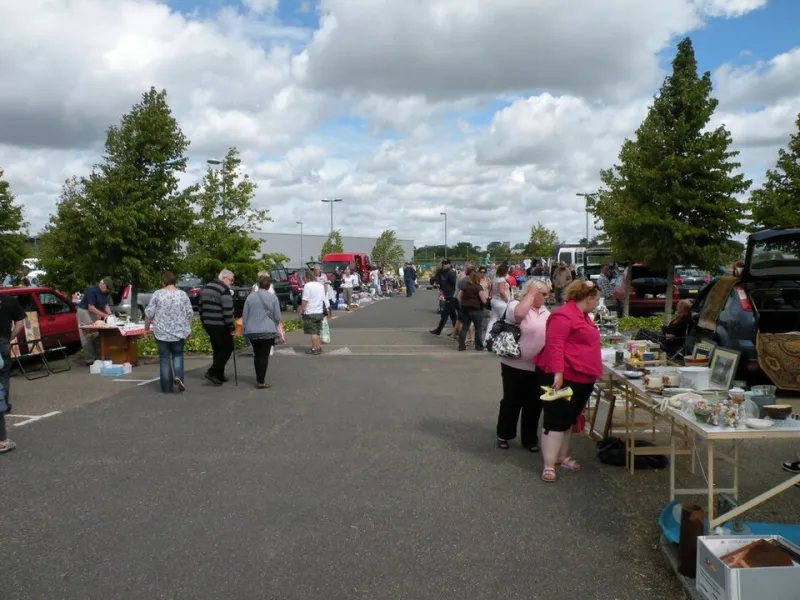
Photo: Keith Edkins , CC BY-SA 2.0, via Wikimedia Commons
At 6.12 on a Sunday morning, a field on the edge of town is already awake. Cars queue with their headlights on, boots half-open, and a man in a fleece is selling tea from a hatch that smells like the best possible decision. This is not really a shopping trip. It is a weekly reunion with a side of chipped crockery.
Car boot sales have always been about the thrill of the rummage, but in 2026 they feel different. Maybe it is the price of a decent day out. Maybe it is the fact that every other corner of life has been optimised into an app. Either way, the tarmac has become one of Britain’s friendliest Sunday institutions — less a marketplace, more a social club where the entry fee is a fiver and the dress code is sensible shoes.
The 6am handshake
Regulars will tell you the first hour is not about buying. It is about checking in. The stallholders who have been doing the same pitch for years greet each other with a nod, a raised eyebrow and a quick verdict on the weather. Someone is always unpacking a box of saucepans while explaining that they are “not really doing it this week” — a sentence that has never once been true.
By 7am, the atmosphere shifts. The serious rummagers arrive with torches and tote bags. By 9am, families are drifting in for a slow lap and a bacon roll. By lunchtime, the whole thing folds back into a field, and everyone goes home with something they did not know they needed.
Field guide: the people you’ll meet on the tarmac
- The Career Stallholder. Has a folding table, a flask and an encyclopaedic knowledge of what sold last week. Will tell you the weather forecast, the best route home and exactly why that vase is worth a tenner.
- The Kitchen Clear-Outter. Arrives with a boot full of mugs, a bread maker and one mysterious utensil. Is genuinely delighted when you take the lot for three pounds.
- The Tool Whisperer. Sells drill bits, spanners and things that look like they belong in a museum of DIY. Will ask what you are fixing before he lets you buy it.
- The Vinyl Vigilante. Has three crates of records, a strong opinion on Fleetwood Mac and a strict no-haggling policy until 8.30am.
- The Tea Van Diplomat. Keeps the whole field functioning. Knows who has the best pitch, who is having a slow morning and who needs a second sugar.
- The First-Timer with a Label Maker. Has priced everything at 50p and is quietly thrilled every time someone speaks to them. By 10am, they have made three friends and sold a lamp.
The language of the tarmac
There is a whole dialect to learn. “What’s your best on that?” is not an insult; it is an opening move. “I’ll take the lot for a tenner” works best when said with a smile and a willingness to walk away. “It’s for a project” is the universal excuse for buying something baffling. And “do you have a bag?” is less a question than a small act of kindness.
The etiquette is simple: be cheerful, be fair, and do not block the table while you tell a long story about your nan’s old sewing machine. Unless, of course, the stallholder started the story first. Then you are both in it for the long haul.
The finds that follow you home
In 2026, the car boot is not a retro novelty. It is where people go to furnish a first flat, replace a lost drill bit, find a board game with half the pieces missing and buy a paperback they will never read. The best finds are rarely valuable. They are just oddly specific: a set of side plates that match nothing, a toolbox with someone else’s initials on it, a cassette tape with a handwritten tracklist.
And then there is the social haul. The phone number of someone who fixes bikes. The name of a good plumber. The knowledge that the woman behind the cake stall runs a choir on Wednesdays. You came for a bargain and left with a thread of local life you did not have before.
Why 2026 feels different
There is a quiet rebellion in spending a Sunday morning talking to strangers about a cracked plant pot. Car boots are gloriously unalgorithmic. Nobody is recommending anything. There is no queue curated by a screen. You have to look, ask, listen and decide. It is slow, slightly muddy and much more fun than it has any right to be.
Maybe that is the comeback. Not the stuff — although the stuff is excellent — but the unplanned conversation. The car boot is one of the last places where you can turn up alone, potter about for two hours and come home with a story, a teapot and a new acquaintance who knows a lot about lawnmowers.
A first-timer’s survival notes
- Take cash, including coins. Some stalls have card readers, but the best ones are still powered by a biscuit tin.
- Bring your own bags. Strong ones. The good finds are often heavier than they look.
- Ask before you touch. Especially if the stallholder is mid-story.
- Buy the tea. It is part of the experience and it keeps the whole ecosystem running.
- Do not haggle over 50p. Haggle over the thing you actually want, then pay the 50p anyway.
- Leave your ego at the gate. You will miss the good stuff. Everyone does. There is always next Sunday.