Staples, Sermons and a Rogue Apostrophe: Life Inside the Parish Magazine
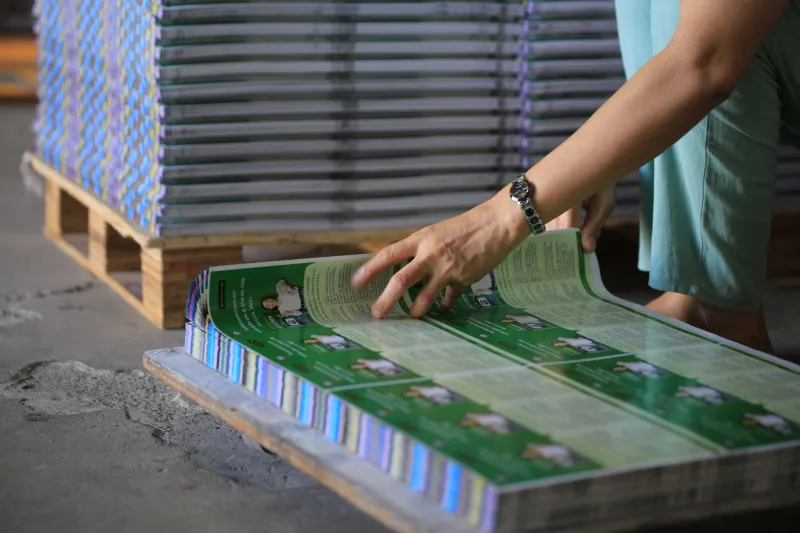
On the first Tuesday of the month, the kitchen table at St Cuthbert's — let's call it that, because every parish has a St Cuthbert's if you look hard enough — disappears under a snowdrift of A4. There are service times, a list of raffle winners, a notice about the church roof, and a recipe for lemon drizzle that has clearly been photocopied from a photocopy of a photocopy. This is parish magazine assembly night, and it is one of the most cheerfully unglamorous rituals in British community life.
The parish magazine is not a slick operation. It is usually 16 to 24 pages, stapled by hand, funded by adverts for dog walkers and chimney sweeps, and distributed by a rota of people who know exactly which letterbox sticks. In 2026, when so much local news arrives as a push notification, the parish magazine still arrives as a physical object. You can read it with a cup of tea. You can fold it. You can leave it on the hall table for a fortnight and still find it there.
We followed one issue from cover to cover. It was, as ever, a masterpiece of accidental comedy and genuine usefulness.
The cover: clip art, service times and a deadline in bold
The cover sets the tone. Ours featured a stock image of a robin, a list of Sunday services, and the words 'Copy deadline: 14th of the month' in a font that suggested urgency without panic. There was also a small box saying 'Please note: the church office is open Tuesday and Thursday, 10am–12noon, unless it isn't.' That last clause is the parish magazine equivalent of a shrug.
What looks like clutter is actually a front page doing three jobs at once: telling you when to turn up, reminding you to submit your news, and quietly advertising the fact that someone, somewhere, is still keeping the whole thing going. The robin is optional.
Page three: thank-yous, lost property and a cat called Bramble
Page three is where the community does its admin. There was a thank-you to everyone who helped with the autumn fair, a notice about a missing glove (left on the radiator in the vestry), and a short item headed 'Bramble Update'. Bramble, I learned, is a cat who has been missing since August. The update was not that Bramble had been found. The update was that Bramble had been seen. This is the kind of distinction that parish magazines excel at.
There were also two classified ads. One offered 'logs, seasoned, honest prices'. The other said 'piano lessons, gentle approach, no exams unless you really want them'. I have never met the piano teacher, but I trust them completely.
The centre spread: adverts that know your street
Parish magazine adverts are a local economy in miniature. In one issue you can find a mobile hairdresser, a man who sharpens garden tools, a yoga class in the village hall, and a plumber whose advert has not changed since 2011 but who is, by all accounts, very good. The adverts are not targeted by algorithm. They are targeted by proximity. If you live three streets away, the plumber probably knows your neighbour.
According to the volunteers, advertising is what keeps the magazine free — or, more accurately, keeps it at 50p a copy, which is collected in an honesty box by the door. 'We don't make a profit,' said Janet, who has edited the magazine for nine years. 'We make a photocopier feel wanted.'
The typo: 'Hymn Singing' becomes 'Hymn Singeing'
Every parish magazine has a typo that becomes folklore. Ours was in the notice about choir practice: 'Hymn Singeing, Thursday 7.30pm.' The vicar, who is a good sport, circled it in red pen and wrote 'bring your own extinguisher' in the margin. The next issue will almost certainly contain a correction. The correction will almost certainly be longer than the original notice.
These errors are not a sign of failure. They are a sign that the magazine is made by people, not software. A spellchecker would have caught 'singeing'. A volunteer laughing at a kitchen table catches it too — but only after the staples have gone in. That is the deal.
The bake sale: a full-page account of cake diplomacy
The back pages are where the parish magazine really comes alive. This issue had a full report on the harvest bake sale, including a table of the cakes sold, a paragraph on the 'fierce but friendly' competition between the Victoria sponges, and a note that the gluten-free brownies 'went first, which surprised everyone'.
There was also a crossword. I did not finish it. The clue for 4 down was 'A blessing, in eight letters' and the answer, I later discovered, was 'BENEDICTION'. I am still annoyed.
How it gets made: a rota, a photocopier and one brave proofreader
Janet and her team are not journalists, and they would be the first to say so. They are a retired teacher, a churchwarden, a retired teacher's husband, and a woman named Pauline who does the stapling because 'it gets me out of the house'. They meet monthly, argue gently about fonts, and take it in turns to ring the vicar and ask whether he really meant to write 'pubic' instead of 'public' in the pew sheet.
The magazine is printed on the church photocopier, which is temperamental. Sometimes it jams. Sometimes it prints everything at a slight angle. Sometimes it produces 200 copies when you asked for 150, which is why there is a pile of last month's issues by the door with a sign saying 'Help yourself, they make good firelighters'.
Why it still matters in 2026
The parish magazine is not trying to be a newspaper. It is a noticeboard with staples. But that is exactly why it works. It carries the tiny, specific information that no app will ever bother with: which gate is locked, who has a spare key, when the mobile library visits, and why the church path is muddy. It is slow, local and slightly wonky — and it is still one of the best community newsletters Britain has.
If you want your own street or village in print, start small. A single sheet, folded, with a clear deadline and one brave editor, is enough. Ask local businesses for a small advert. Give a copy to everyone. Accept that there will be a typo. Then do it again next month. The parish magazine has been doing exactly that for decades — and in 2026, it is still the best excuse to knock on a neighbour's door and say, 'Did you see page seven?'